
Liverpool’s arduous start to the season has not been easy, having been on a winless run in the league. They have struggled on both ends of the pitch, especially in attack, which has produced one goal in the opening four WSL games.
A tie against Manchester City, who seem to have quickly found their stride, was a match-up with odds stacked against them. However, as the recently promoted WSL 2 side London City has showcased over the past weeks, it is possible to cause upsets against teams that have played at a higher level for the past few years.
City have impressively displayed their ability to bounce back quickly after a frustrating and narrow defeat to the reigning champions as they look to dethrone Sonia Bompastor’s dominant Chelsea. Since then, they have strung together a run of victories, with a dramatic 3-2 win against Arsenal, as covered by Josh Manley last week. A fixture against Liverpool, an opponent likely willing to cede majority possession, presented a different test for Andrée Alexander Jeglertz’s team.
City’s Press: Minimizing Liverpool in the build-up phase
The visitors are one of the best out-of-possession sides in the WSL, so it was no surprise to see them pressing Liverpool high and doing so intensely. Against the 4-2-4 build-up shape, which was used during goal kicks and deep possession phases, City pressed high with a player deficit.
During goal kicks, they would leave a player in midfield free. Meanwhile, in Liverpool’s settled possession phases, City tried to force Liverpool down one side whilst leaving the opposite fullback free. This allowed them to have a numerical advantage in the center, which offered coverage when the opponent hit long balls.
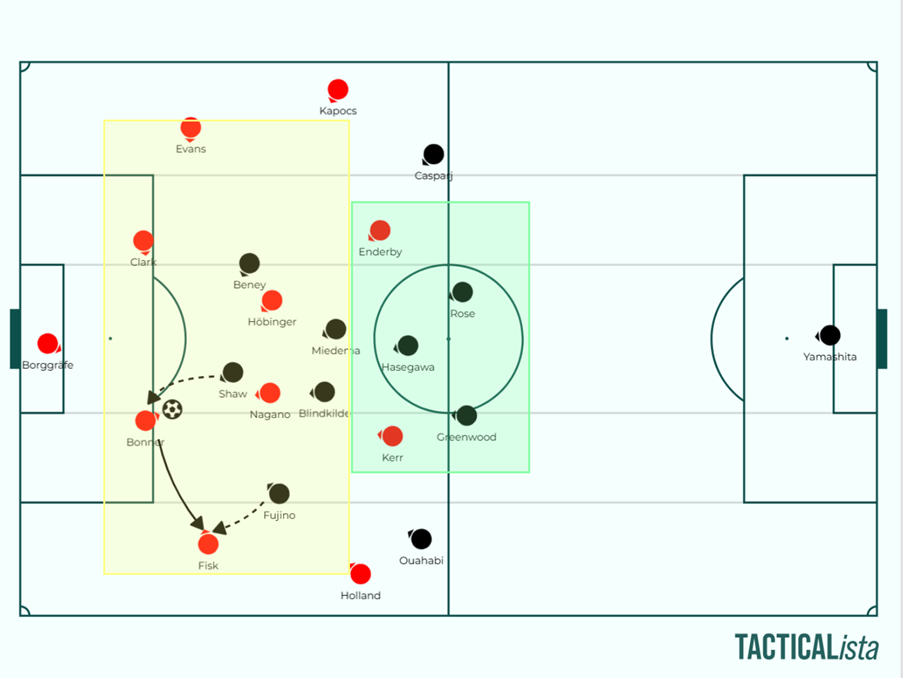
The intensity and timing of City’s press regularly forced Liverpool to go long, from which they would regain possession. Since Gareth Taylor’s team are not yet proficient enough on the ball to find the free player through short passes, they had to cede ball control.
Liverpool’s Defensive Line: Inviting the long balls
Although the home side did not control possession, they did not sit back early and defend from a low block. Instead, when City had the ball, Liverpool maintained a high defensive line whilst forming a 5-4-1 block. This invited long passes from City to either find their wide players or hit the channels for the central runners, who were on their toes and anticipating this ball.
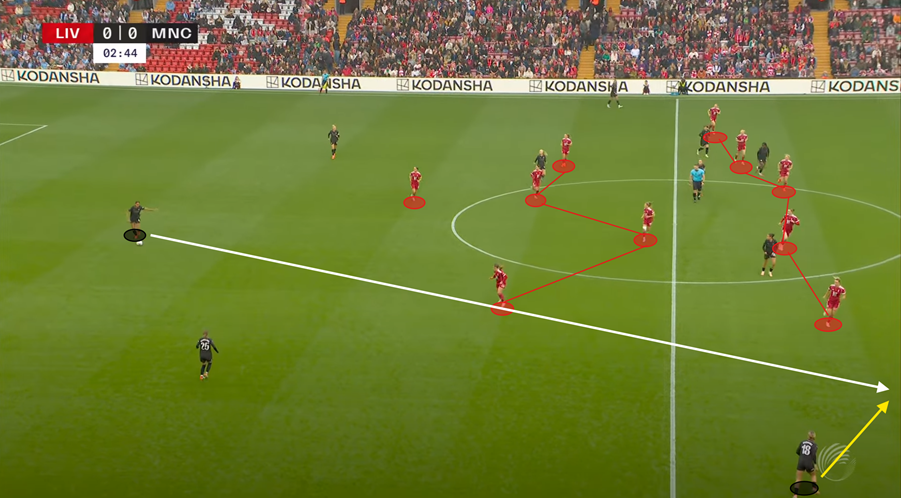
Meanwhile, in possession, Jeglertz had both fullbacks push up and join the attacking unit, whilst a central midfielder dropped deep to form a back three. Thus, with a 3-1-6 structure, City could overload Liverpool’s backline in certain moments. But generally, in the first half, their attacking sequences were usually quick moves as they tried to move vertically and exploit the space behind Liverpool’s high defensive line.
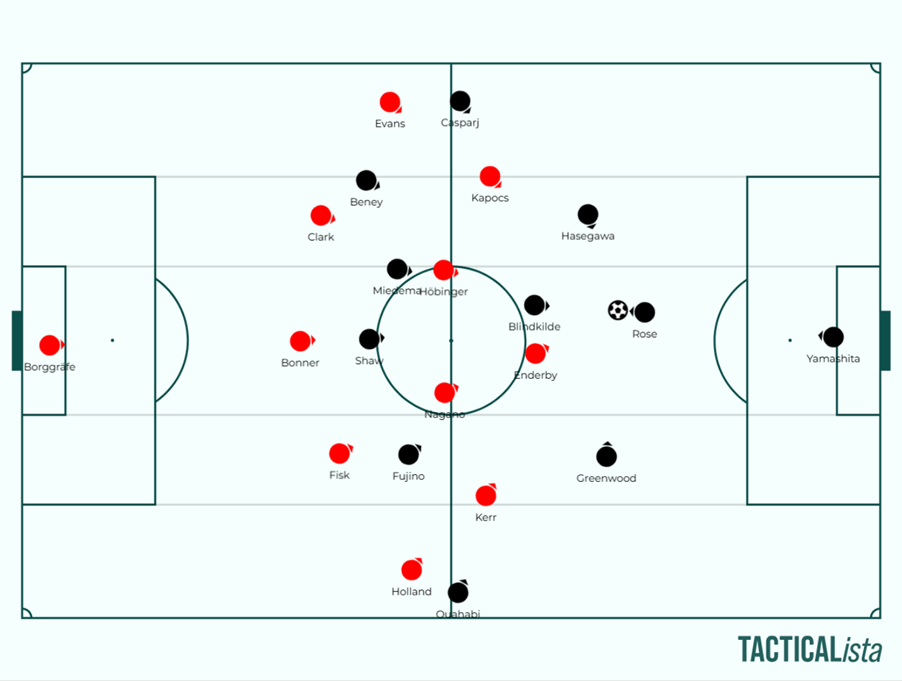
City’s In-Possession Adjustment: Building with a back two
The visitors soon realized that they did not need a back three since Liverpool only had a player in the frontline. Instead of having a 3v1 overload, the City central midfielders stopped dropping deep and maintained their positions.
This allowed City to keep the overload against Mia Enderby whilst having another body in midfield. Furthermore, Yui Hasegawa and Laura Blindkilde could initiate runs beyond the opposition backline from deeper starting positions to catch them off guard.
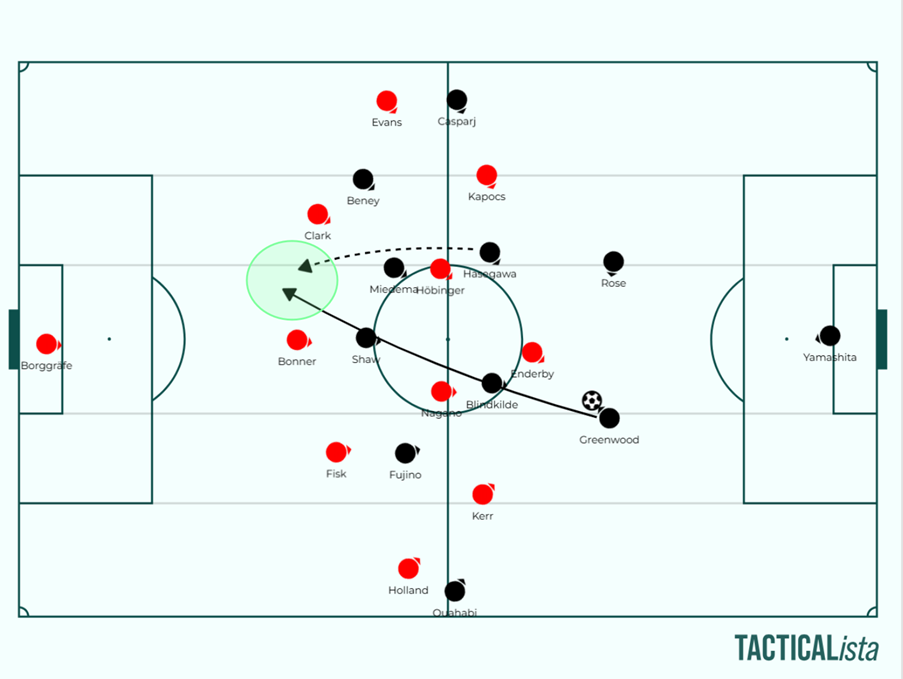
The downside, however, was that during defensive transitions, City would have one player fewer. The other implication was that their wide channels were especially exposed in counters, which was an opportunity for Liverpool’s wingers.
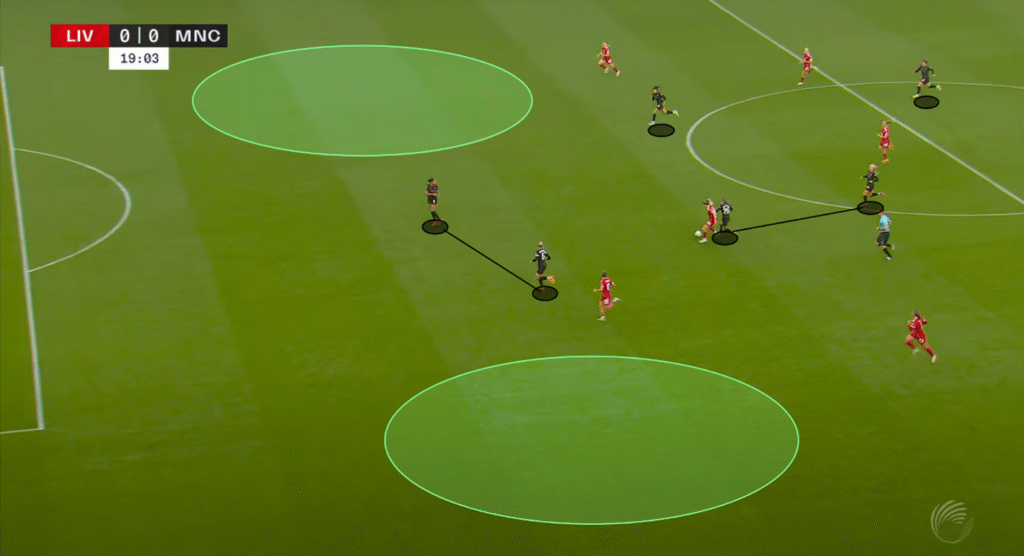
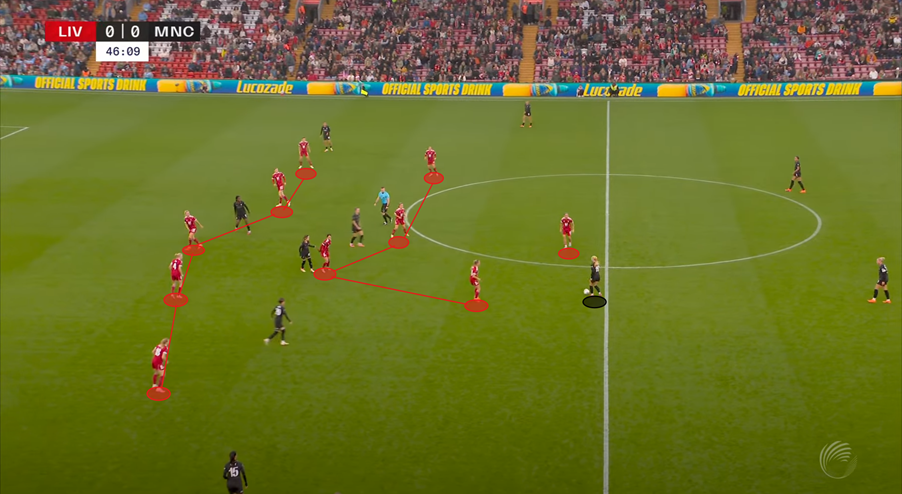
As the first half wore on, Liverpool gradually began dropping their defensive line deeper. This theme spilled over into the second half as City tried to pierce through the block in a structure that resembled either a 2-1-7 or 2-2-6.
The broader and more important point, rather than the shape, was City’s intent. They constantly tried finding passes between and over the lines. This strategy proved to work to a fair extent in the first period as they generated a few decent opportunities. Nevertheless, the weakness on the counter was still apparent at times.
1-0 Liverpool: Making the most out of a scrappy situation
Despite City’s dominance, it was the home side that opened the scoring unexpectedly. In a rare period of possession in the opposition half, Liverpool made the most of a throw-in situation as they managed to work the ball to the right flank before whipping an excellent cross that was met by Cornelia Kapocs at the back post, where Kerstin Casparj should have arguably done better.
1-1 City: Equalizing in the same manner
It was pretty ironic how the visitors equalized in a similar manner to the way Liverpool scored—from a throw-in. Although they crafted a few good chances from open play, a throw-in followed by a quickly released cross by Alex Greenwood led to a header for Khadija Shaw. The Liverpool goalkeeper managed to push it to the side. However, Iman Beney was swift to react and immediately pounced on the loose ball and scored from a fairly tight angle.
2-1 City: Taking the lead in style
The first two goals of the match might have originated from slightly scrappy play. However, the winner was far from that. City manufactured a beautiful sequence, pinning Liverpool back and slicing through the defensive block with multiple diagonal passes. The on-ball pressure paid off.
Conclusion
The final scoreline might have been narrow, but similar to Chelsea’s 1-0 win over Spurs at the weekend, this was also not a game where both teams delivered roughly equal standards of performance. City created plenty in the final third, especially in the first half.
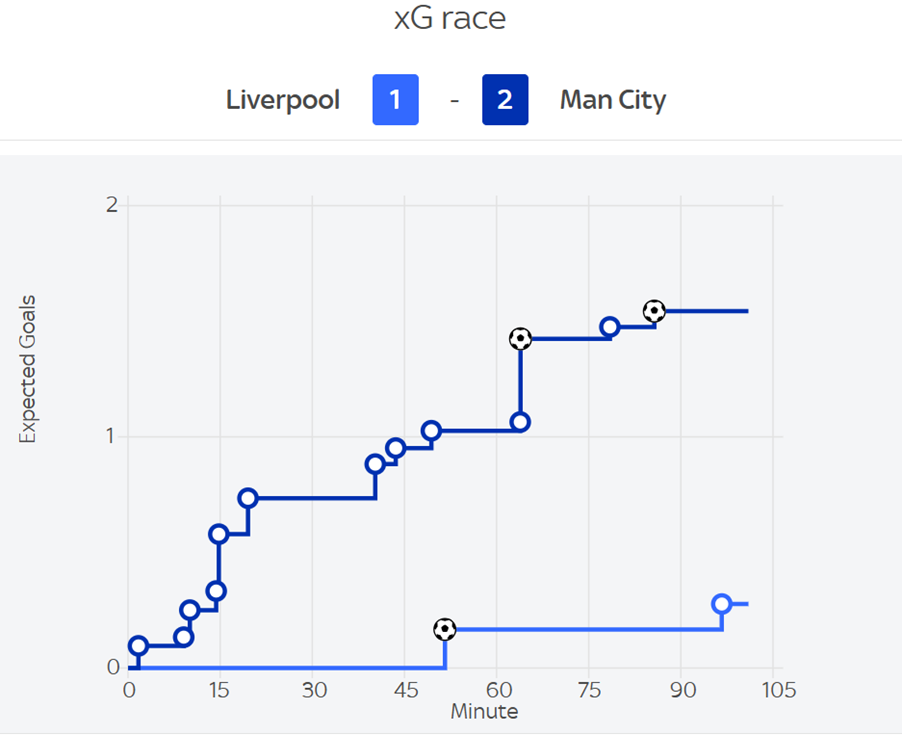
Source: Sky Sports
Although Taylor lost against his former club, there were still some positives to take as they fought till the end against one of the title contenders. The next test will be fourth-placed Spurs, which will also not be easy and, at the moment, does not look like a game that will end their winless run. Meanwhile, for City, the following fixture is a favourable one against West Ham United, who have also not secured a win in the opening league matches.